Soy Milk Fruit Basundi
Basundi is a traditional Indian Mithai (dessert) that is made of reduced Cow or Buffalo Milk. My version of Basundi has soy milk instead, and I’ve noticed that people who taste my Basundi can never be able to guess it’s made of Soy Milk. Be ready to toil some on this one (about 4 hours) so plan accordingly. I promise the results will be worth it! Serves 4-5 people.
You will need:
- 4 Liters Plain Soy Milk
- 1 small can sweetened condensed Milk
- 1 small pack of Heavy whipping cream (leave this out if you want to go low-fat all the way)
- 4-5 cloves of Cardamom
- 3-4 drops of Vanilla essence or Pulp of 1 Vanilla pod
- 5-6 strands of saffron (optional)
- 1 tablespoon – zest of an orange
- As many chopped fruits as you like – Apple, Raspberries, Strawberries, Orange segments, Grapes
Method:
- In a large pot, pour in the Soy Milk and bring to a boil
- After it comes to a boil, reduce the stove heat to medium and let it simmer gently, while stirring with a spoon occasionally to prevent the milk from forming a layer on the bottom of the pot
- Milk needs to be simmered till it reduces to 1/3rd it’s original size
- While the Milk boils, add in the Condensed Milk, Whipping cream (if using), and Cardamom pods
- When the milk is reduced, shut off heat, add the Vanilla essence and stir well
- The Reduced milk may have strands of cooked milk so you can drain it in a sieve if necessary
- After draining, add the lemon zest and the saffron and mix well to allow the saffron to infuse in the milk
- Let the milk cool to room temperature, after which it needs to go to the refrigerator to chill
- Just before serving, add in the chopped fruits, mix well and enjoy!
The quest for healthy and yum
By day, I’m a marketing professional at a major Retail brand here in the twin cities. By night – a wannabe chef 🙂 Starting this blog with my sister is an extension of my creative and gourmand side. I started cooking when I was living by myself during my Masters degree here in the US. I thoroughly enjoyed the learning and experimenting that came with it. At first, the urge was to make everything sinfully delicious and fatty that I ate as a child at home. Over the years, I’ve learnt that healthy food does not have to taste like cardboard and I innovate in my own way to create scrumptious, healthy dishes.
My philosophy toward cooking is simple: Food should be flavorful and healthy, always. In my attempts at experimenting, I have often taken traditional Indian recipes and made my own personal changes, to make it lower on calories, cholesterol and fat. I hope OneLifeToEat becomes your source of ultimate recipes. Wishing you all the luck and happiness!
Indian cooking 101: Know your ingredients
[tweetmeme source=”sabera” only_single=false]
This is the first of a series of educational posts on Indian cooking. Learning how to cook Indian food is futile if you don’t familiarize yourself with the major ingredients used across cuisines in the country.
Indian cooking requires some basic ingredients that are extremely versatile. If you have these in your pantry you can whip up a quick Indian dish in no time. You can easily find them at any Indian grocery store and fortunately they are readily available in the ethnic foods section of most grocery stores (I have seen them at both Rainbow and Cub).
1. Knowing your Lentils, Pulses & Beans
I just found a great web page detailing the common types of Lentils, Pulses and Beans used in Indian cooking. It’s short and interesting and gives a basic overview of this nutritious and essential part of Indian food.
2. Must-have spices & Grains
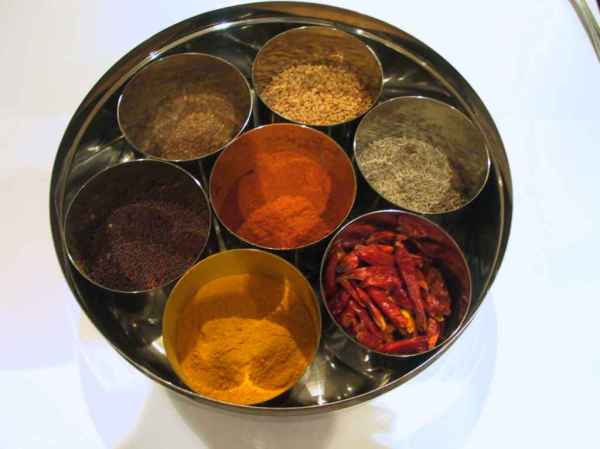
Spices are stored as above in any Indian household
Red Chilli powder
Tumeric powder
Coriander powder
Cumin Powder
Garam Masala (concoction of several spices such as nutmeg, cinnamon and cardamom)
Ginger paste
Garlic paste
Green chillies (thinner than the Mexican ones)
Curry leaves
Black Mustard seeds
Fenugreek seeds (Methi seeds)
Cumin seeds
Coriander seeds
Basmati rice
Cinnamon sticks
Bay leaves
Ghee (clarified butter)




 One Life to Eat