Coconut Shrimp Curry – Indian style
I put ‘Shrimp curry’ on my menu for this week – after I saw a packet of jumbo shrimp on sale at the grocery store – with no idea as to how I’d make it. After some trolling on the internet, looking for a good, spicy, indian-ish recipe (what mostly came up were thai-style curries), I came across one that was almost what I was looking for. Almost. Using this recipe as an inspiration, I’ve created my own version, to make it simpler to prepare, as well as to suit my taste and cooking style.

Serves 4
You will need:
- 24 ounces of shrimp – raw or cooked – deveined, shelled and thawed
- 1 can of coconut milk – approx. 13.5 ounces
- 1 large onion, roughly chopped
- 2 large tomatoes, roughly chopped
- 1 tablespoon tomato paste
- 1 tablespoon ginger-garlic paste
- 4 tablsepoons vegetable oil + 1 tablespoon vegetable oil, separated
- 2-3 dried bay leaves
- 1 teaspoon chilli powder
- 1/2 teaspoon turmeric powder
- 1/4 teaspoon cayenne pepper powder
- 1/4 teaspoon Paprika powder
- Salt to taste
- 1 cup water
- Freshly squeezed juice of 1/2 large lemon
- a handful of chopped cilantro leaves for garnishing
Method:
- In a large pot, heat 4 tablespoons of vegetable oil
- When well heated, fry the roughly chopped onions on medium heat. Make sure not to brown the onions.
- When the onions are softened and translucent, add the ginger-garlic paste. Mix well and allow to fry for about 30 seconds
- Then add the chopped tomatoes with the tomato paste. The paste adds color to the curry.
- When the tomatoes are soft and well incorporated with the onions, turn off the heat, and empty the contents of the pot in a food processor
- Add 1/4 cup water to the mixture and blend into a paste
- In the same pot you used before, heat 1 tbsp of vegetable oil on medium heat
- Once well heated, reduce heat to low and then add the Bay leaves, and allow to fry for a minute
- Then add the blended onion and tomato paste
- Allow the paste to re-fry for 30 seconds or so
- Put in all the dry powdered masalas
- Mix well, allowing the spices to cook well
- After a minute of stirring, add the coconut milk and mix everything well together
- Add salt to taste, and allow the gravy to simmer on low heat for 1-2 minutes. Add some warm water if you feel the curry is too thick
- Just before serving, add the shrimp and allow it to cook in the curry (if using raw shrimp)
- If you are using cooked shrimp, add it in the gravy just before serving, but do not let it simmer on heat. Turn off the heat and let the shrimp heat up in the curry itself.
- Season with lemon juice and garnish with Cilantro leaves
- Serve with steamed white rice
Baby Food – Yellow lentils (Daal) with vegetables
This post marks OneLifeToEat’s venture into Indian baby food. Hope this recipe helps all you creative mothers out there!
I’ve met countless mothers who are bored to death of the limited recipes they have in stock for making food for their babies and toddlers. And then I’ve met some who are adventurous enough to expose their children to international cuisines right from a young age, but never find the right recipes that suit a child’s delicate palette. After a chat with a friend who voiced similar concerns, I came up with this modified daal recipe for children, where I’ve tweaked the Indian staple, to add vegetables to make it extra yummy, and extra nutrilicious. Lentils or Daal are high in Protein and Carbohydrates, and essential for a growing child’s needs.
Suitable for children 3 years and up
You will need:
- 2 cups yellow lentils. (To see what they look like, see here)
- 4 cups water
- Assorted veggies of your choice – carrots, green beans, sweet peas and russet potatoes or sweet potatoes (add any others you stock at home)
- Chopped small red onion or quarter chopped, large red onion
- 1 Small tomato, chopped OR 1 tbsp Tomato paste
- 2 tbsp Olive oil
- 1/4 tsp turmeric powder
- 1/4 tsp cumin powder
- 1/4 tsp black pepper
- 1/4 tsp sugar
- Salt to taste
- Finely chopped Coriander leaves / Cilantro for garnishing
The Method:
- Soak 2 cups of yellow lentils overnight. In the morning, boil them with 4 cups of water for about 45 min to an hour. If you own a pressure cooker you need not soak them. You can pressure cook them for 15 minutes on medium heat (about 3-4 whistles) and they are ready to serve. Pressure cookers are available at an Indian grocery store but I have seen them at Bed Bath & Beyond. The ones available at BB&B are from Mexico and in fact they are safer than the Indian one! They take the same amount of time to cook though.
- Once the lentils are cooked through, mash them with a potato masher and keep aside. Do not discard the water, it’s actually very nutritious.
- Microwave in a bowl all the veggies that you like.
- In a small pot heat some olive oil. Once well heated, add the onions and fry on medium heat till they are translucent.
- Then add the tomato paste or chopped tomatoes. Mix well and let it soften with the onions.
- Add the spices: ¼ tsp turmeric powder, ¼ tsp cumin powder, ¼ black pepper, ¼ tsp sugar and salt to taste. The cumin powder and black pepper is actually very good for kids, it helps with their digestion and turmeric has anti-bacterial properties.
- Add the boiled lentils and veggies to this mixture and let it simmer for 10 minutes. You may blend all the ingredients in a blender, like a puree. If you find the lentils a little dry you can add ½ cup of water or I generally add some vegetable broth. It actually tastes better and its great for the kids too.
- Garnish with finely chopped coriander leaves and serve hot with soft rice. You can add a dollop of butter on the rice & daal mixture, for extra taste.
Aloo Paratha (Potato-stuffed Indian bread)
A Paratha is a type of Indian bread, that literally means – layers of cooked flour. It has a thick, chewy, crunchy texture and is usually eaten with pickle, yogurt, or a lightly spiced vegetable and sometimes with Chhole (Chickpea in spiced gravy). Other types of Indian breads include the Roti also known as Chappati – which is a thin, roasted, circular bread made of wheat flour, and the Poori – thin, refined flour (Maida) dough, which is then deep fried.
Paratha’s are usually stuffed with vegetables and sometimes even mince meat. Aloo Paratha’s (Potato stuffed Paratha’s) are my personal favorite because it reminds me of home. My mother served it for breakfast at times and when I was a child, I often woke up to the fresh fragrance of roasting dough, and the sound of sizzling ghee (clarified butter) in my summer holidays.
In this recipe, I take you through the process of making a Paratha, step by step, from scratch. While it does look complicated, I have tried to explain how to roll the dough (atta) in the best and easiest way possible, followed by the next step, which is stuffing the paratha. It takes some practice to get this right, but it’s worth the effort. I hope you enjoy the experience!
The following recipe makes about 4 paratha’s and feeds 2 people.
Method:
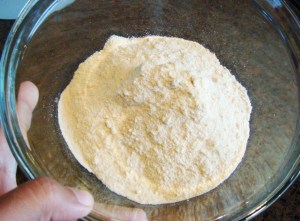
Wheat Flour
* 1 cup warm water
* 3-4 tablespoons full-cream milk
*1/2 teaspoon salt
* 1 tablespoon vegetable oil
– Take a large, deep bowl and put all the flour, oil, milk & salt in it. Mix coarsely with your fingers.

Mix the flour, oil, milk and salt mixture coarsely with fingers
– Now slowly add the water, 4-5 tablespoons at a time, while mixing well with your fingers. Keep adding water till the flour and water have mixed to form a soft, but firm mass. In case you add too much water by mistake (It happens!), add flour to the bowl, little by little, continuously mixing the dough, till it reaches a soft consistency.
– Now pummel the dough with your fist into the bowl for about 2-3 minutes.

Pummell the dough
– Once done, keep the dough aside for about 1/2 hour before making the paratha’s.
Step II – For the potato stuffing:
* 3 medium sized potatoes washed, boiled and peeled
* 4-5 tablespoons chopped onion
* a handful of chopped coriander
* 6-7 leaves of mint, finely chopped
* 1 teaspoon salt
* 1 teaspoon chili powder
* 1/2 teaspoon turmeric powder
* 1 teaspoon Dhania – Jeera powder (available ready in Indian stores)
* 1 teaspoon Chaat masala (available in Indian stores)
* Juice of 1/2 lemon
– Mash the potatoes well, in a large bowl. Add Onion, chopped Coriander & Mint and all the dry spices along with the lemon juice. Mix everything well together.
Assembling the Paratha: You will need –
* A rolling pin and a rolling stone – if you don’t have a rolling stone, roll out the paratha on your clean kitchen counter
* Some dry flour in a flat, large bowl or box
Method:
– Take a small quantity of dough (about double the size of a golf ball) and knead it into a ball with both your palms.
– On a rolling stone, flatten the ball of dough with your fingers. Cover it with some dry flour, on both sides
– Start rolling the pin across the ball of dough, with some pressure, so that it the dough now looks like a flat oval
– Turn the oval around, so that it is now horizontally lying in front of you on the rolling stone, and roll the pin from top to bottom, toward you, to flatten out the dough in the other direction, to make a circle

Flattening out the dough
– Once you have a roughly circular, fairly thick piece of dough, you can begin the stuffing.
– Hold the rolled out dough in the palm of your left hand, and take a spoonful of the potato mixture. Place it between the circular piece of flattened dough

Place the potato mixture in the middle of the dough
– Now, carefully, close the dough around the potato mixture, and seal the stuffed ball of dough.

Seal the ball of stuffed dough
– Put 1/2 a tsp of ghee / Oil to heat on a non-stick pan on medium high, at this point
– Put the stuffed dough back on the rolling stone and gently roll out the dough in a circle, flattening it out, in one direction at a time

Roll out the stuffed dough
– Continue to gently roll out the dough till you can see a very thin layer of dough covering the potato stuffing inside.
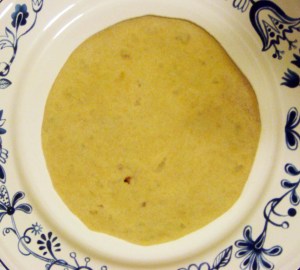
The rolled out stuffed paratha
– Check if the pan is hot enough, and place the paratha to cook. Allow to cook on medium heat, for at least 2 mins on each side, or till the dough is cooked golden-brown.

Cook the paratha till it is golden-brown on each side
– Enjoy the paratha fresh off the pan, with some spiced yogurt, or Mango pickle.




 One Life to Eat