Masala Chai – Recipe for the ultimate Indian beverage
[tweetmeme source=”sabera” only_single=false]
My father is really big on breakfast. The meal is literally celebrated, and as should be, is considered the most important meal of the day. Eggs formed an essential part of the meal, along with at least 2 different types of jams, butter, freshly toasted bread and fresh cream. As I grew older, I noticed my father’s breakfast habits change. From his regular fried eggs, it became hard-boiled eggs, and then oatmeal with sugar. By the time I left India and moved to the US, all he ate was oatmeal with honey and low-fat milk. Butter is now bought only when it is required for a special recipe or for guests.
What never changed was his cup of chai every morning. That, he never gave up. Chai is the quintessential Indian beverage that every Indian has a special memory of. Evenings spent with that special someone at their favorite roadside tea stall. Reading The Times of India every morning with a cup of chai made just right. Ending a night out with friends with warm cups of masala chai. Having chai in clay cups at railway stations on the way to Delhi. We all have our stories.

Cutting Chai - meaning half a cup of Chai. This is how Chai is usually served in Mumbai, India. Photo credit: Premshree Pillai's Flickr photostream
Chai the way it is prepared in India today, was originally made so as to mask the taste of inferior tea accessible to the common Indian. Premium blends and the best quality teas were consumed by the British before independence in 1947, and good quality tea was prohibitively expensive for the common Indian. The method of preparation of course, has just stuck on over the years and you’ll rarely find an Indian have black tea.
Every Indian you talk to will probably also have his / her own favorite method of preparing Chai. Variations include brewing the loose tea leaves in boiling water, brewing them in milk, brewing tea leaves along with spices (known as Masala Chai) and brewing the chai with pieces of ginger (known as Ginger or Adrak Chai). Some like their chai weak, some like it strong. Some like more milk, some less. Some prefer using inferior quality tea dust, some like specific brands of tea. An Iranian cafe next to my home sweetens the chai with condensed milk and then boils the mixture for at least an hour. The result is a thick, creamy Chai that is really really delicious and refreshing.
Did you know that the flavor of chai is enhanced by the height from which it is poured into a cup?
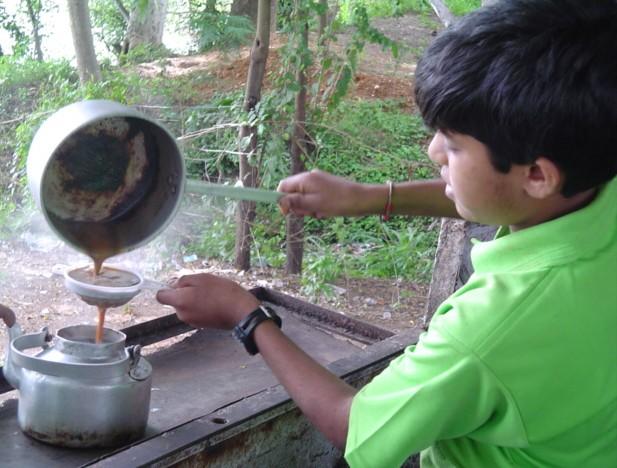
A boy preparing tea at a typical tea stall in India. Photo credit: Wikipedia
I have a bit of a detailed process to making chai. I like mine thick, so I simmer the brewed tea with milk for a good amount of time. I flavor my Chai with spices and ginger pieces, and sometimes, even vanilla sticks. I have it with Tea rusk and sometimes, hot buttered toast. Hope you try my recipe for chai and enjoy it as much as I do!
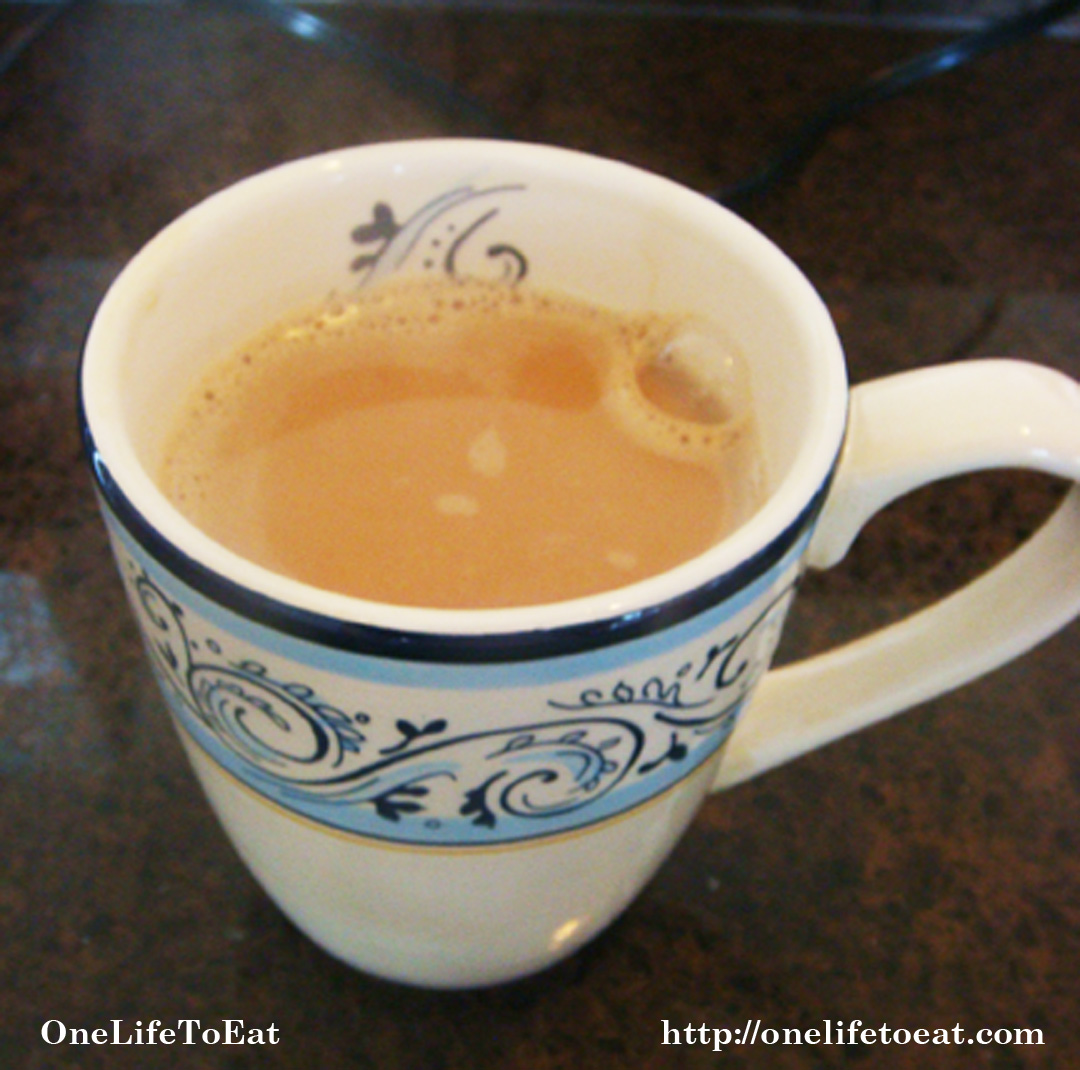
Chai
To make 2 mugs of Chai – You will need:
- A medium sized saucepan
- A small sieve
- 4 heaped teaspoons Red Label or Society tea (available at any Indian store)
- 1 inch piece of ginger root
- 6-7 cardamom pods, slightly opened
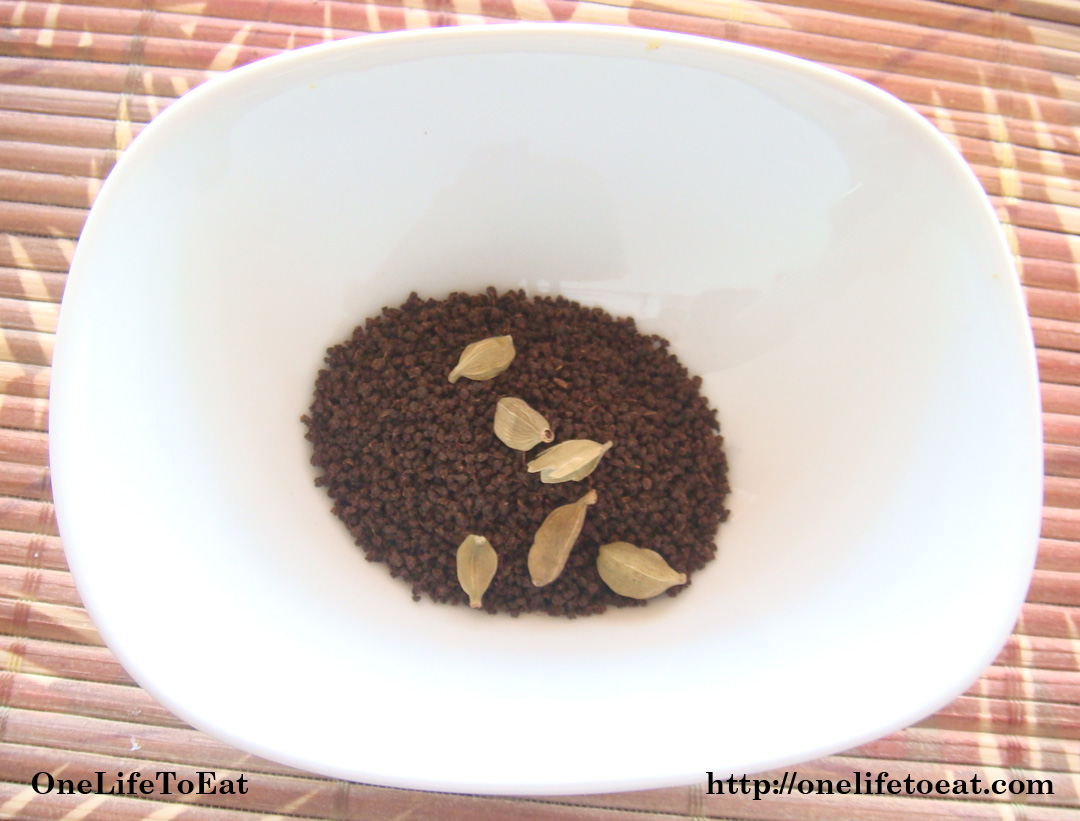
Tea leaves and cardamom pods
- 3 tbsp sugar
- 1/2 Vanilla stick (optional)
- 1.5 cups water
- 1.5 cups whole fat milk
Method:
- Heat water to a boil in the saucepan
- Add the tea leaves, cardamom pods and ginger root and allow to brew on medium heat till the water turns a golden brown color
- Add the milk and reduce heat to low. Add the vanilla stick and sugar at this stage. Mix well
- Allow the tea to boil gently and thicken on low heat for about 10 minutes. Keep an eye on the saucepan as the Chai may boil over
- Turn off the heat and let the liquid rest in the saucepan for 2-3 minutes. This lets the temperature of the liquid come down a bit
- Pour through a sieve in your favorite mug and enjoy with a scone, cookie or chivda
Dal Makhani
[tweetmeme source=”sabera” only_single=false]
I was curious to know which dals OLTE’s readers like to eat and I held an online poll last week. The options were Yellow Dal, Channa Dal & Dal Makhani. The results were quite surprising to me, until I realized that Dal Makhani is the more commonly served lentil at Indian restaurants here in the US. This week, I bring to you the recipe for a classic North Indian dish, that is so creamy and buttery to the taste, you’ll want to come back for more again and again. Best had with Paratha’s, it is commonly made in households of Punjab – A north Indian state.
Dal Makhani literally means in Hindi – Lentils in Butter. And the original recipe is true to its name. As the recipe originated in a region of India that used to be the highest producer of Dairy products, the dal is cooked in butter, and garnished with fresh cream and a dollop of butter when served. The lentils used here are the whole Urad dal and Red beans. The combination of these 2 lentils makes this dish high on protein, very nutritious and ideal for the vegetarian diet.
 Red kidney beans

Whole Urad dal or Black lentils
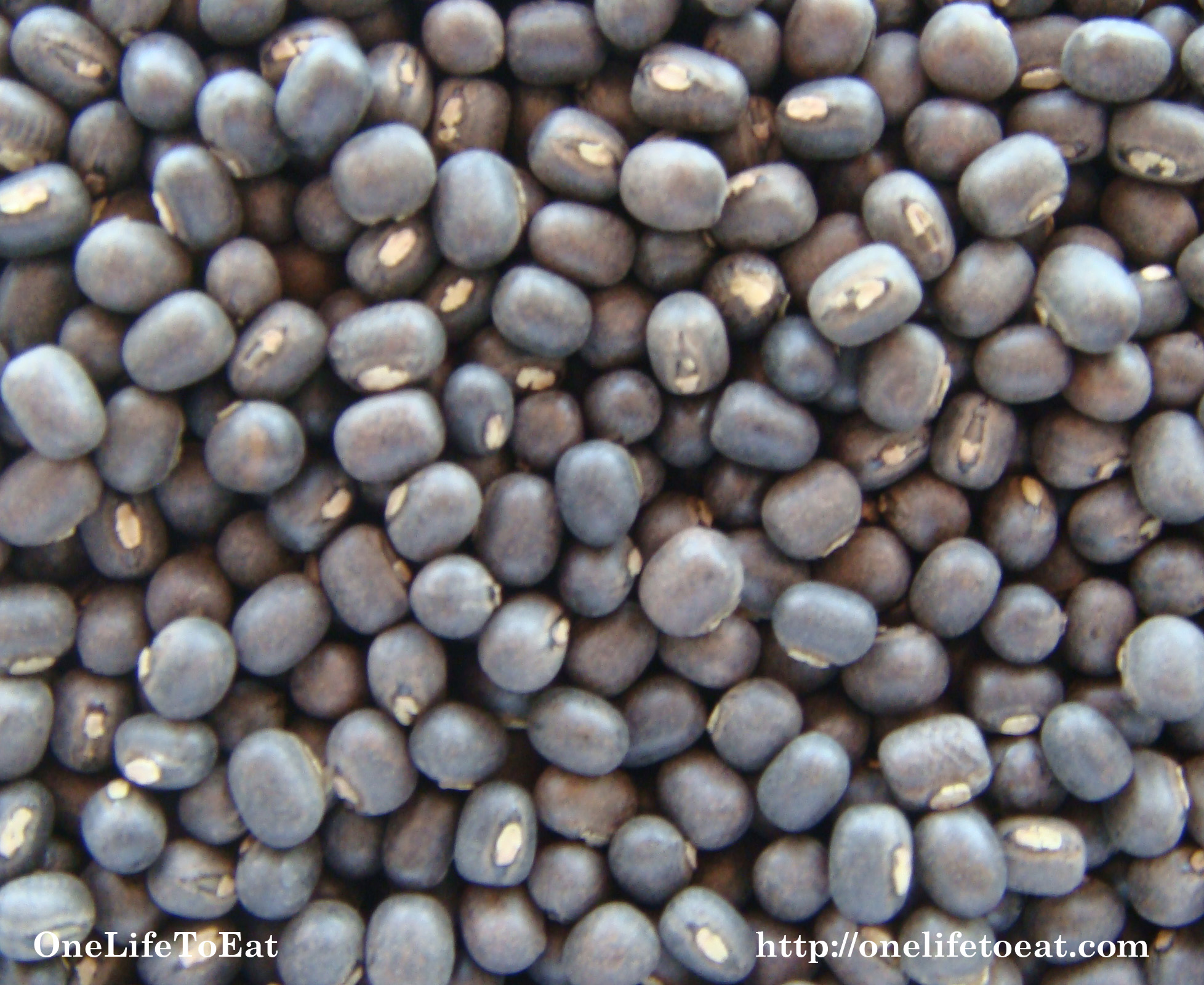
I feel the creamy texture of the Whole Urad dal gives the dal a buttery texture. My recipe has no cream, unlike the traditional recipe, and is cooked in a teaspoon of butter and some oil. Serves 4.
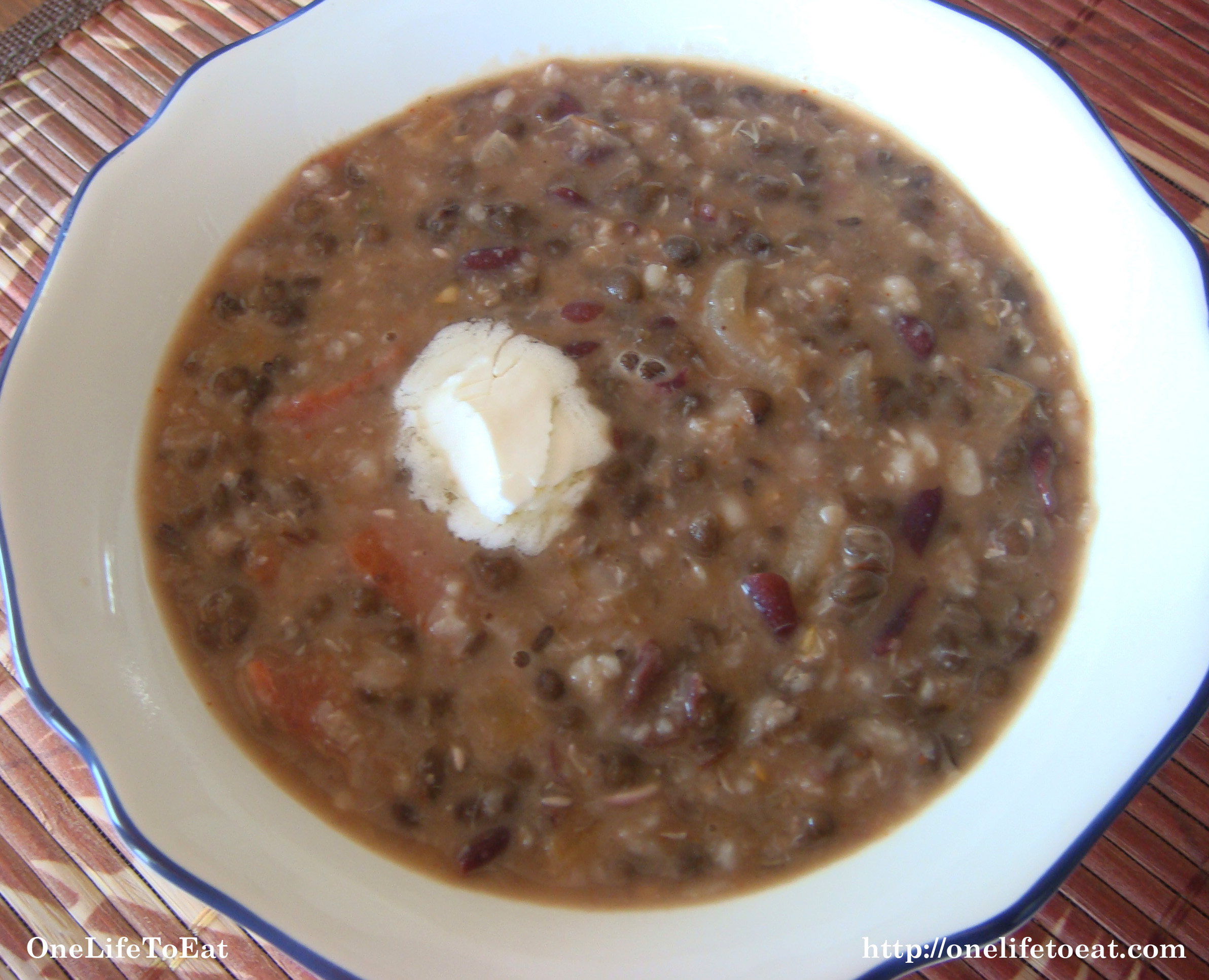
Dal Makhani
You will need:
- 1 cup Whole Urad dal – Look for ‘Sabut Urad dal’ or ‘Whole Urad dal’ in the grocery store
- 2 tablespoons Red kidney beans
- A pressure cooker
- 1 tbsp oil + 1 teaspoon unsalted butter
- 1 green chili, slit lengthwise
- 1 tsp cumin seeds
- 1/2 large onion, finely chopped
- 1 large tomato, finely chopped
- 1 tsp red chili powder
- 1/4 tsp garam masala powder
- 3/4 tbsp Ginger & garlic paste
- Salt to taste
- Lemon juice for garnishing
Method:
- Wash and soak the Urad dal + red kidney beans in 2 cups of water overnight
- Drain the water and cook the dals in a pressure cooker with about 3 cups of water, for 4-5 whistles
- Check the dals after they are cooked. They should be mushy. Cook them with some more water for 1 more whistle if they are still a little hard
- Mash the dals roughly. Keep aside
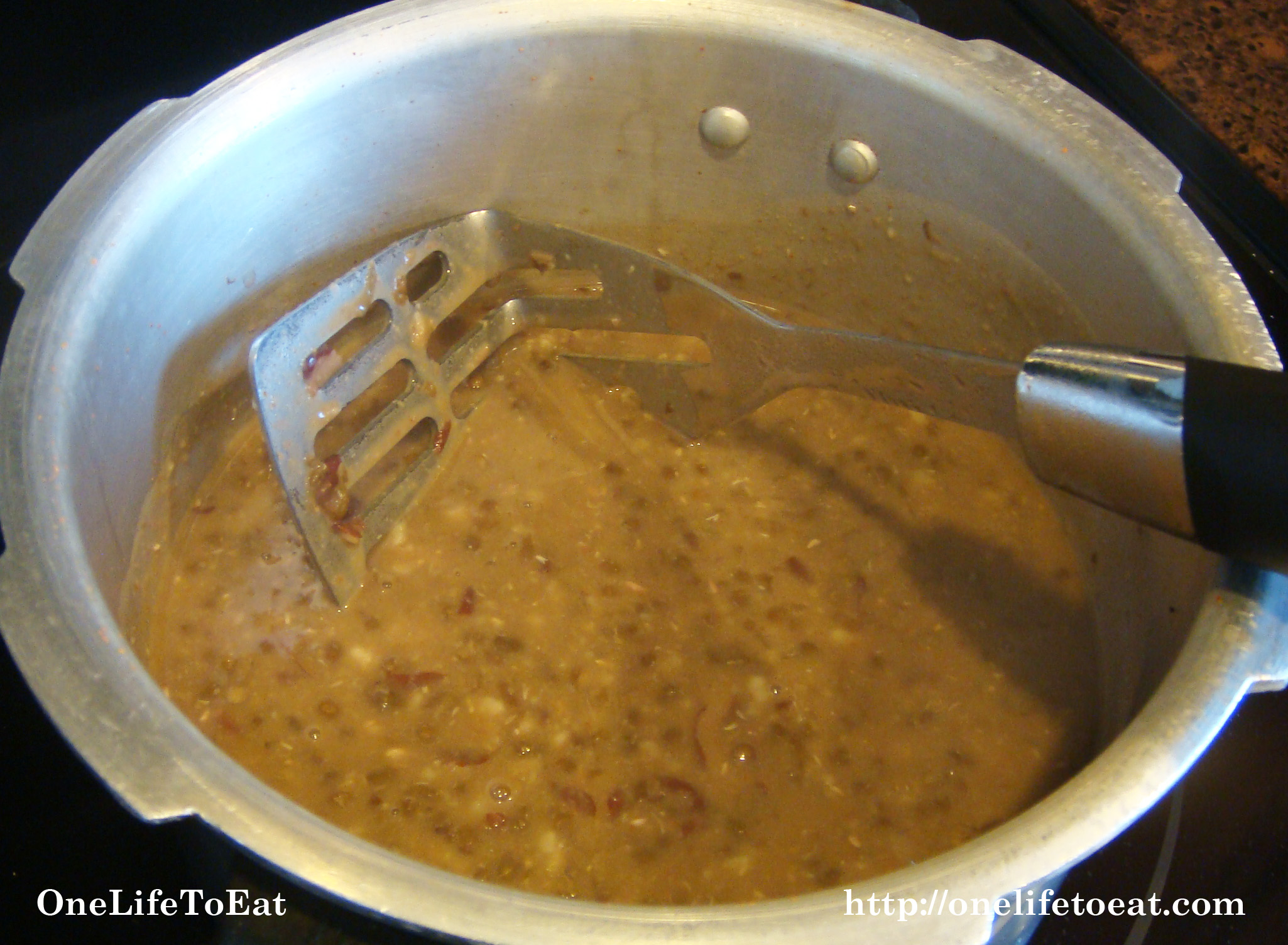
Roughly mash the cooked dals together
- In another pot, heat the oil & butter
- Add the green chili slivers and cumin seeds
- As soon as the cumin seeds begin to crackle, add the chopped onions and cook on medium heat till lightly browned and soft
- Add the ginger & garlic paste, and cook for a few more seconds
- Then add the tomatoes and cook till they are soft
- Add the Red chili powder and mix well
- Finally add the mashed dal mixture in this pot and mix well
- Add salt to taste and the garam masala powder
- Allow the whole mixture to simmer on low heat for 1-2 minutes. Add more water to the dal if you want it thinner
- Serve hot. Garnish with some lemon juice and enjoy with some paratha’s or Zeera Rice.
Paneer Mattar & OLTE’s 1st Blogiversary
[tweetmeme source=”sabera” only_single=false]
Today marks one year since the creation of OneLifeToEat the Blog. It’s hard to put into words what has really happened through this blog for me, the past year. Starting OLTE was to fuel a personal passion for food, and it was high time I came on the other side of the table – the kitchen – to try it out for myself. People say, you should start a food blog when you have great recipes to share. For me, it was the other way around. I am far better a cook than I was a year ago (my husband’s honest opinion), I appreciate the process of food preparation much more (sorry, mom for all those tantrums about food!) and most importantly, I’ve met some truly wonderful food bloggers who I have learned so much from.
OLTE has also helped me grow as a Marketing professional. A side-effect of actively managing this blog is my continuing self-education about Social Media, Blog management and Content development. I’ve even had a shot at my first Guest post earlier this week. I finally believe Matt Cheuvront about the One Thing that will completely change your life that he spoke of in a vlog earlier this year on his inspiring blog. I strongly suggest you read his blog if you plan to start your own, have one, or have been procrastinating on starting a blog for much too long a time.
It’s been one amazing year and look forward to so many more.
Back to food now!
Paneer Mattar, which literally means Cottage Cheese and green peas, is a light, fragrant curry that is popular in North India. As is with all cooking, variations to this dish include different preparation methods. My recipe is part of the the Curry series on OneLifeToEat and is prepared with the same curry base, but with different ratios of ingredients. Since the Cottage cheese doesn’t need to be ‘cooked’ this dish literally takes just 30 mins to prepare! Serves 2.

Paneer Mattar
You will need:
- 1 large onion, roughly chopped
- 2-3 medium sized tomatoes, roughly chopped
- 3tbsp vegetable oil + 1 tbsp vegetable oil
- 1 bay leaf
- 1/2 tsp cumin seeds
- 1 tsp Ginger-Garlic paste (50:50 ratio)
- 400gms of Indian style Cottage Cheese – cubed into 1 inch pieces (you will get it frozen in the Indian grocery store. Thaw it for a few hours before use)
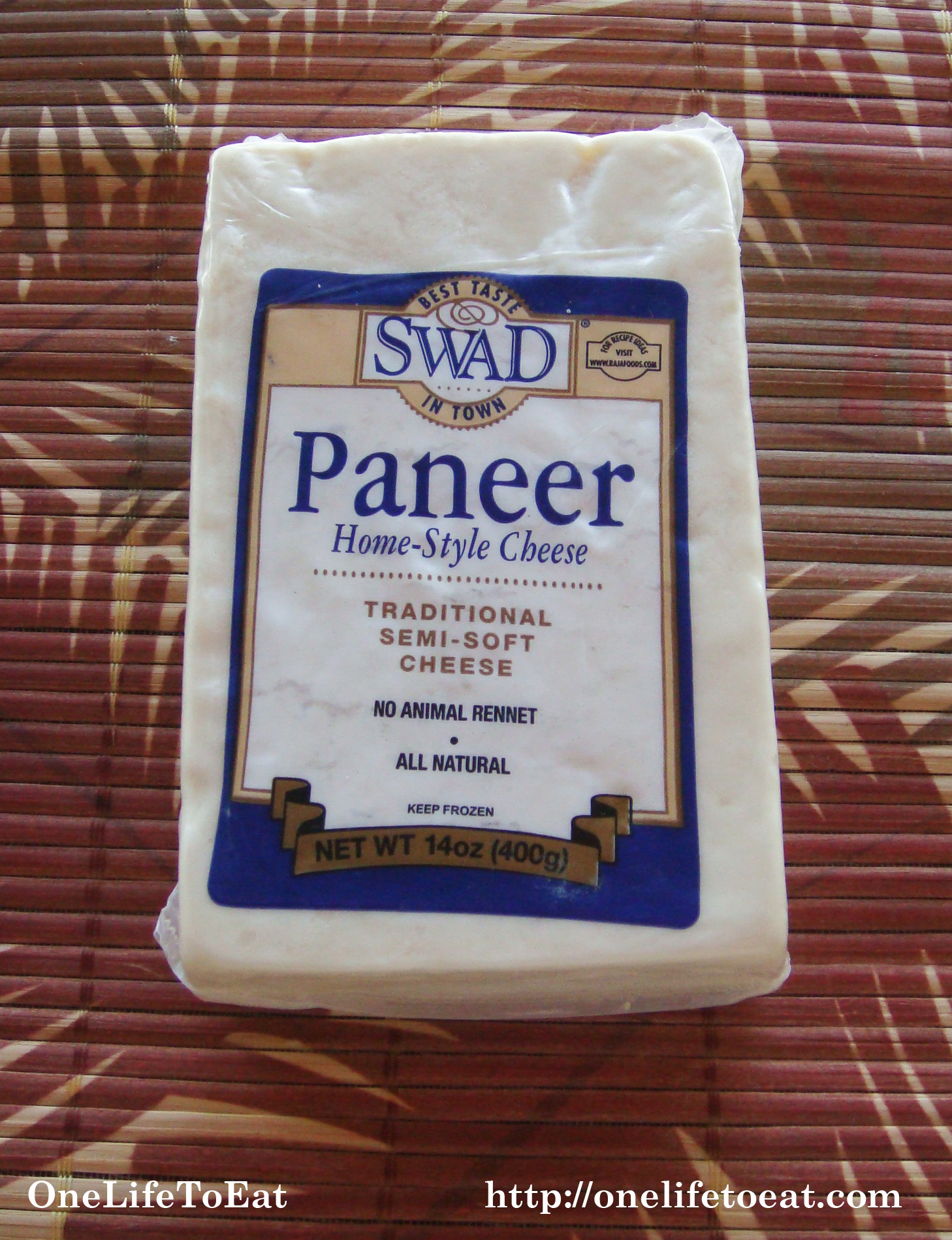
Block of Paneer
- 3/4 cup thawed and cooked green peas
- 1tsp chili powder
- 1tbsp Dhania-Zeera powder
- 1/2tsp turmeric powder
- 1/2tsp Garam Masala powder
- Salt to taste
- Lemon juice for garnishing
Method:
- Heat 3 tbsp vegetable oil in a broad frying pan and fry the onions till they are light brown
- Then fry the tomatoes till they are soft and mushy
- Grind this mixture to a paste with about 1/2 cup water
- In the same pan, heat 1tbs oil and fry the Bay leaves + cumin seeds in it
- Once the cumin seeds start to crackle, add in the Ginger & garlic paste. Fry for 30 seconds
- Now add the blended curry paste, and all the dry spices and salt
- Mix well and allow to fry for about 2 minutes or till the oil separates from the sides of the pan
- Add in about 1/4 cup water again and add the Paneer and the cooked green peas
- Mix well, garnish with lemon juice and chopped Cilantro
- Enjoy with Parathas or Rotis




 One Life to Eat