Teaser announcement: Taking OLTE to the next level
[tweetmeme source=”sabera” only_single=false]
Hello folks! The past few months have been very eventful for OneLifeToEat. I’ve self-hosted, stepped up my efforts to promote the blog on Social Media, written more often, posted more varied recipes (See the post on Green chutney) and as a result have driven in a LOT more traffic here. After a lot of hints and tons of encouragement from loyal readers, it’s now time to take the blog to the next level. Something that will be a really fun opportunity for foodies in the Twin cities, MN. Next Monday I will be announcing the full details of this project. Until then, stay tuned!
Spiced Mince Chicken – Kheema
[tweetmeme source=”sabera” only_single=false]
After a week-long break in Sarasota, FL, my hands itch to make a yummy meal for the hubby and myself again. Today, it’ll be simple Curd-rice, owing to the insane food we’ve forced our tummies to digest all of last week.
OLTE readers, Sabera’s back with the next post!
Spiced mince chicken was one of the first few dishes I learned to make when I started cooking Indian food. Spiced mince meat, also known as Kheema in India, is one of my personal favorites as it is flavorful, takes a relatively short time to make, and it follows all the basic steps in making most Indian curries, making it a dish that any novice to Indian cooking can easily prepare.
Kheema is traditionally made with mince lamb meat and honestly, I love it this way the best. I however gave up red meat several years ago (barring the odd burger or Lamb curry at a good restaurant) and was introduced to Kheema made with mince chicken. What I really love about this dish is it’s versatility. It goes with Bread, Roti’s, Naan and rice. Layer the Kheema between fragrant Zeera rice and you get what is called a Kheema Pulao. The Kheema can also be stuffed in Samosas or rolled into Kebabs.

Spiced Mince Chicken aka Chicken Kheema
To make the Kheema, you will need:
- 1 packet (1.35 lb) of Ground or Mince Chicken, thawed
- 2 dried Bay leaves
- 1 Star Anise
- 2 Inch stick of Cinnamon
- 1 tsp Cumin seeds
- 1 clove garlic, chopped
- 3 tbsp vegetable oil or any other oil you use for cooking
- 1/2 medium sized finely chopped onion
- 1 tbsp Ginger & Garlic paste2 medium sized Roma tomatoes, chopped
- 2 tbsp Hunt’s Tomato paste – Adds a nice color and tang to the dish
- 1 tsp Chili powder
- 1/4 tsp Turmeric powder
- 1 tbsp Dhania-Zeera powder
- 1/4 tsp Garam Masala powder
- 1/2 cup frozen green peas
- Salt to taste
- Chopped Cilantro, Mint leaves and lemon juice for garnishing
OLTE’s Trivia: Bay Leaves, Cinnamon, Cumin seeds and a few other spices (black peppercorn, Cardamon pods, Kashmir chilies etc.), form what is called Whole Garam Masala a.k.a. Khada Masala in Indian cooking.
Method:
- In a large pot, heat the oil and put in the cumin seeds when it is hot. As soon as the seeds begin to crackle, add the Bay Leaves, Cinnamon stick and Star Anise. Allow the whole spices to fry in the oil for 1-2 minutes till they release their fragrance
- Now add the chopped Garlic, and Onion. Allow to fry on medium heat till light brown. In the mean time, remove the mince chicken from the packet and keep aside
- Add the Ginger & Garlic paste, allow to fry for a minute or so and add the chopped tomatoes and tomato paste. Allow to cook with a lid on the pot till the tomatoes are mushy
- Now add all the spice powders – Chili powder, Dhania Zeera powder, Turmeric and Garam Masala powder. Mix well and wait till the oil releases from the sides of the Onion & Tomato paste
- Finally add the mince chicken and mix very well. Put a lid on the pot and allow the chicken to cook in it’s own juices. Occasionally, check the chicken to mix it again and break any lumps of chicken

Green coriander chutney – Mumbai style
[tweetmeme source=”sabera” only_single=false]
We’ve all eaten Indian chutneys in some or the other form. Be it the fancy bottle of Mango chutney you picked up at a specialty grocery store, or a coconut chutney you had at a South-Indian restaurant, chutneys form an important part of the Indian cuisine. Chutneys are a wet, coarse blend of spices, vegetables, at time nuts and other flavorings that go as a condiment with meals from cuisines across India. The South-Indians are famous for their coconut & tomato chutneys and Indians from the state of Maharashtra and Gujarat, make spicy peanut chutneys, Coriander / Cilantro chutneys, Tamarind chutneys and Mango chutneys. Each chutney has a wonderful flavor and aroma.
In this post, I am going to show you how to make real coriander chutney, that back in Mumbai, is used as a condiment with fried snacks and even spread over bread in sandwiches, to name a few uses. I like to call it the pesto of India. I’ve seen the coriander green chutney in various forms, depending on the ratio of ingredients used. I’ve eaten the watery, tangy, super spicy type, which is prepared with a generous portion of green chilies and lemon juice. And then I’ve had the creamy, almost buttery type which is used in sandwiches. My recipe has peanuts, which give the chutney a thick body and amazing flavor. I use whole garlic pods, fresh ginger and freshly cracked pepper to add the extra taste. What I however enjoy the most about my chutney recipe is that it is truly healthy. Coriander leaves are excellent for health and even better when eaten as this fun preparation.
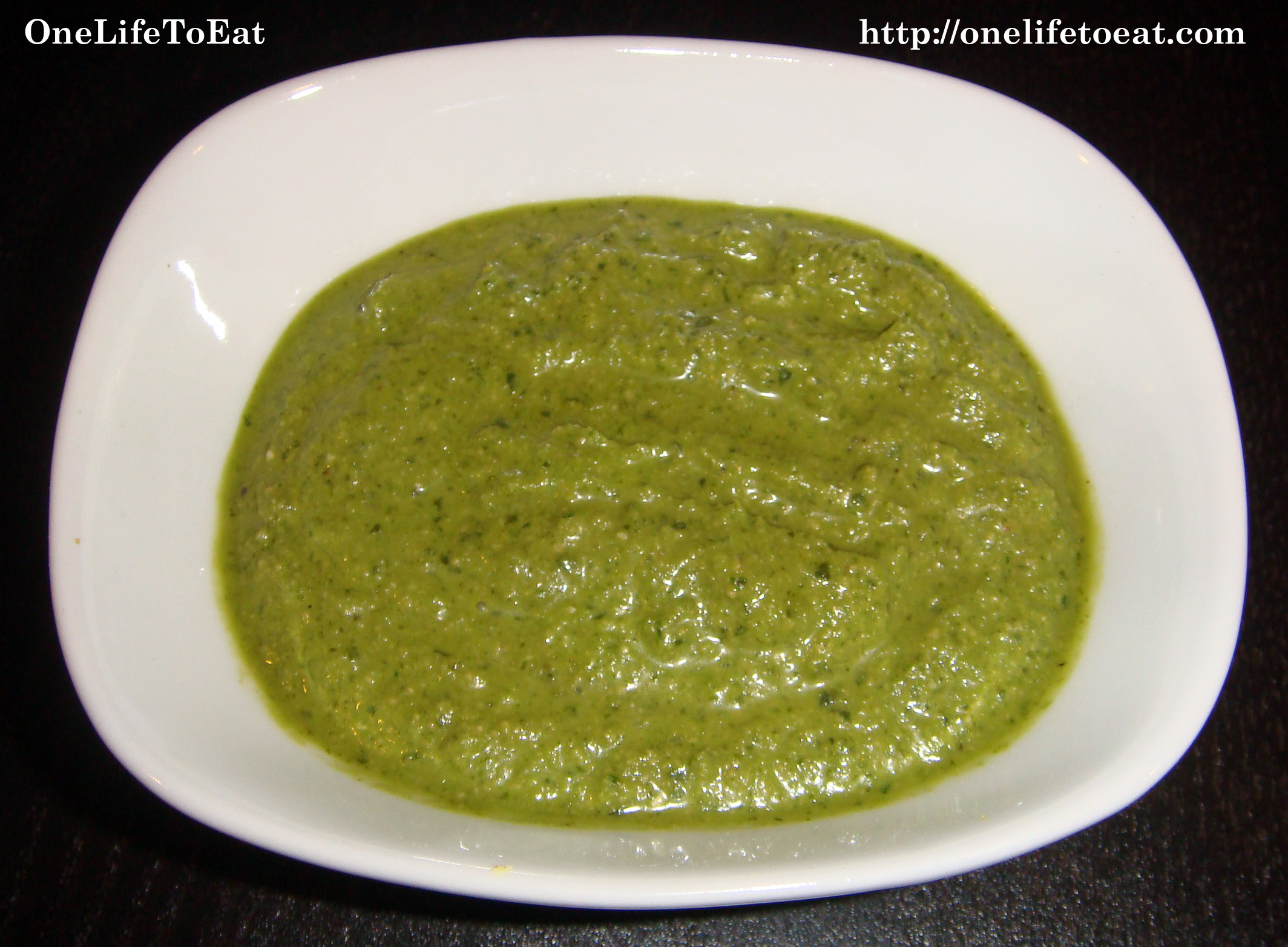
Coriander chutney
While making the chutney is a little time-consuming, it can be made in bulk and stored in the fridge for upto 2 weeks.
You will need:
- 2 bunches coriander / cilantro, washed well and gently dried
- About a handful of unsalted, roasted peanuts
- 2-3 small thai green chilies, washed, and stems cut
- 1 inch piece ginger, peeled
- 1 large of clove of garlic, peeled
- 1 heaping teaspoon freshly ground black pepper
- 1 teaspoon Chaat masala
- salt to taste
- Juice of a whole lemon
- A blender
Method:
- Start by separating the coriander leaf from the stem. I avoid using the entire stem in the chutney as the chutney then has too many strings of fiber in it. The following picture shows which part of the coriander stem should be used for the chutney. Use only the top portion of the coriander stem – upto the second set of leaves. You can use the unused stems in soups and other vegetable preparations to add extra flavor. Remove the stems from the dish before serving.
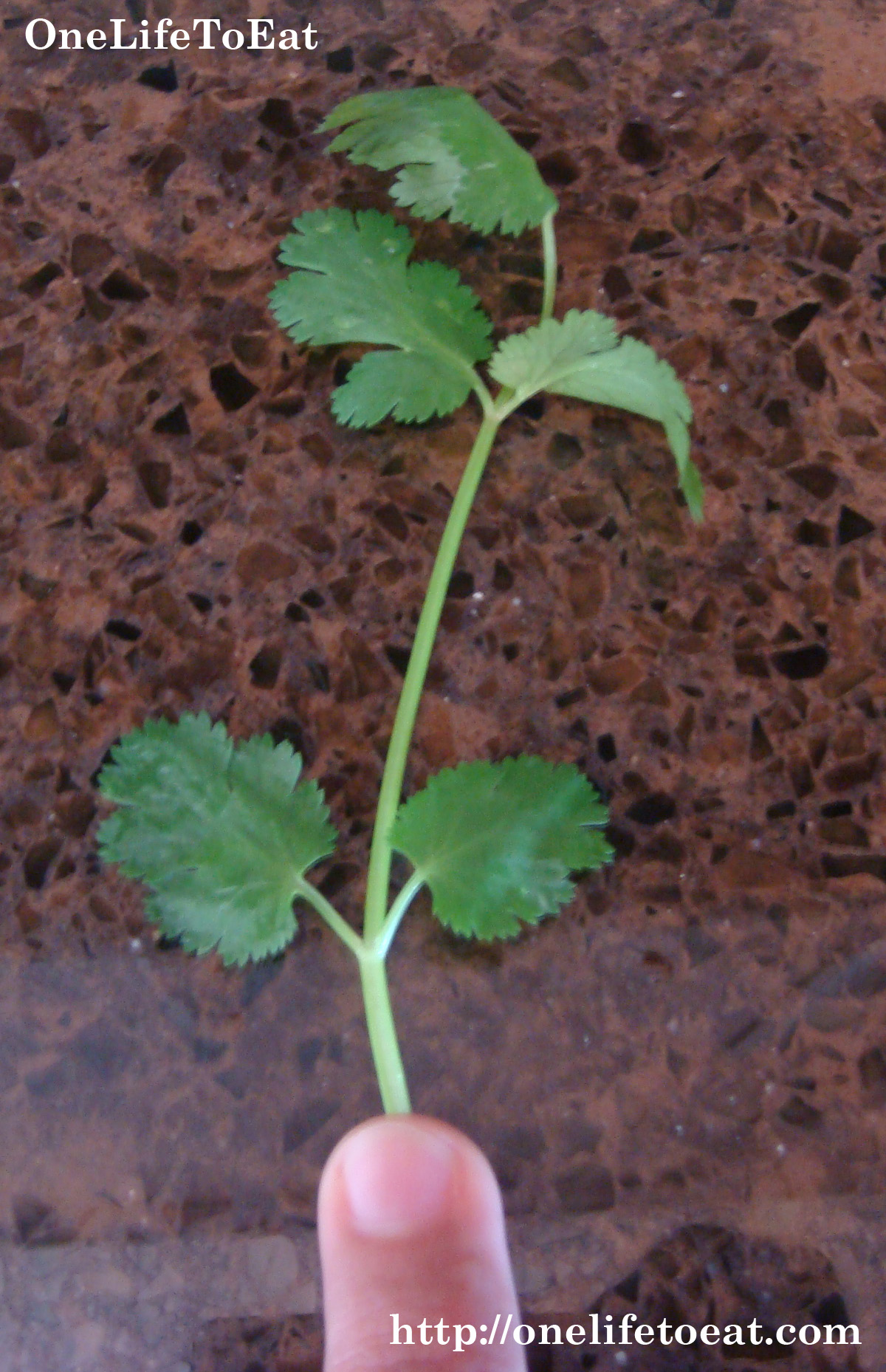
Use only the top portion of the coriander stem - upto the second set of leaves
- Place all the leaves in a blender

- Add all the other ingredients in the blender with about 1/2 cup water. Blend to a puree. If you want the chutney thinner, add more water
Enjoy as a sandwich, with some Veggie Patties or Chana dal patties.




 One Life to Eat