Guest Post: Dal Chawal Palidu – A Bohra Muslim delicacy
Today on OneLifeToEat, Farida guest blogs her recipe for a Bohra Muslim favorite, Dal Chawal Palidu. Farida & I went to the same school and our families know each other very closely. However, it was only after I connected with her when I moved to the US, that our friendship grew. Although the recipe for this mouth-watering dish is a little lengthy, the effort is totally worth it. What’s more, it’s all vegetarian! Try Farida’s recipe when you’re in the mood for some innovative Indian fare and you won’t be sorry.
Of all the dishes that mark the Dawoodi Bohra cuisine, if I had to pick one that is extremely unique and representative of our food, it would be Dal Chawal Palidu (Lentil rice served with a curry.) In most Bohra households, this dish typically signifies a happy occasion such as the start of the New Year or a birthday, so I have many special memories associated with it. And though I’m not too fond of vegetarian food, Dal Chawal Palidu (also known as khuddal palidu) has always been one of my favorite dishes – simple, nutritious and yet extremely delicious!

Dal Chawal Palidu
You Will Need (This recipe serves 4):
For the Dal Chawal (lentil rice)
- 1 cup toor dal (also known as toovar dal or split pigeon peas)
- 1.5 – 2 cups of rice
- 1 tsp turmeric powder (haldi)
- 4 cloves of garlic, chopped
- 5 whole black pepper corns
- 1 tsp whole cumin seeds
- 1-2 bay leaves
- 1” piece of cinnamon
- 1 small onion, chopped
- 2 medium-sized green chilies, chopped
- 2 tbsp oil
- Chopped scallions for garnishing (optional)
- Salt to taste

Toor Dal - raw
For the Palidu (curry)
- Leftover lentil/dal water (see method for details)
- 1 tsp methi (fenugreek seeds)
- 4 cloves of chopped garlic
- 1 small onion, chopped finely
- 4-5 curry leaves (optional)
- 2 tbsp besan or (gram flour or chickpea flour)
- ½ tsp red chili powder or according to taste
- ½ tsp turmeric powder
- 1 tsp coriander-cumin (Dhania Zeera) powder
- 3 tbsp oil
- Coriander (cilantro) for garnishing (optional)
- Drumsticks – 6-7 pieces, cut to 3” size each). As an alternative, you can also use a small or medium-sized bottle gourd (calabash) or dudhi (cut into small pieces.) I prefer drumsticks since it adds an interesting flavor and texture to the palidu or lentil curry. You can buy the drumsticks fresh or frozen (these come cleaned and chopped) from an Indian store.

Frozen Drumsticks are available at any Indian grocery store
Method
For the dal chawal
- Boil the toovar dal in water in a pan over a medium heat for around 10-12 minutes or until it is almost cooked, adding turmeric and some salt. (The dal should remain whole and not turn mushy.) Strain the water from the dal and keep it aside.
- Heat oil in a pan. Add the garlic, black peppers, cumin and bay leaves. Once they start crackling, add the chopped green chilies and onion. After the onion starts browning, remove the mixture from the heat and mix in the cooked toor dal and keep aside.
- Cook the rice until it is ¾th done and layer it over the cooked dal in a cooking pot. Add around ¼ cup of water, cover the pot with a lid and let the rice mixture steam on a low flame for 5 minutes. Cook until the rice is completely cooked.
- I like to garnish the dal-chawal mixture with some scallions though this is my personal preference and completely optional.
For the palidu
- Heat oil in a pan. Add the methi or fenugreek seeds, curry leaves, chopped garlic and onion. Once the onions soften, add turmeric, red chili powder and the coriander-cumin powder.
- Add besan (gram flour) to the mixture and sauté for two minutes on a medium flame, stirring continuously. Add little water, if necessary, to prevent the mixture from burning.
- Add the drumstick pieces and stir for another minute.
- Add the leftover dal/lentil water to the mixture and let the mixture boil slowly.
- Cook the palidu till it boils and the drumsticks are cooked (it should turn soft and fleshy from inside,) adding more water if necessary.
- Garnish the palidu with coriander (cilantro.)
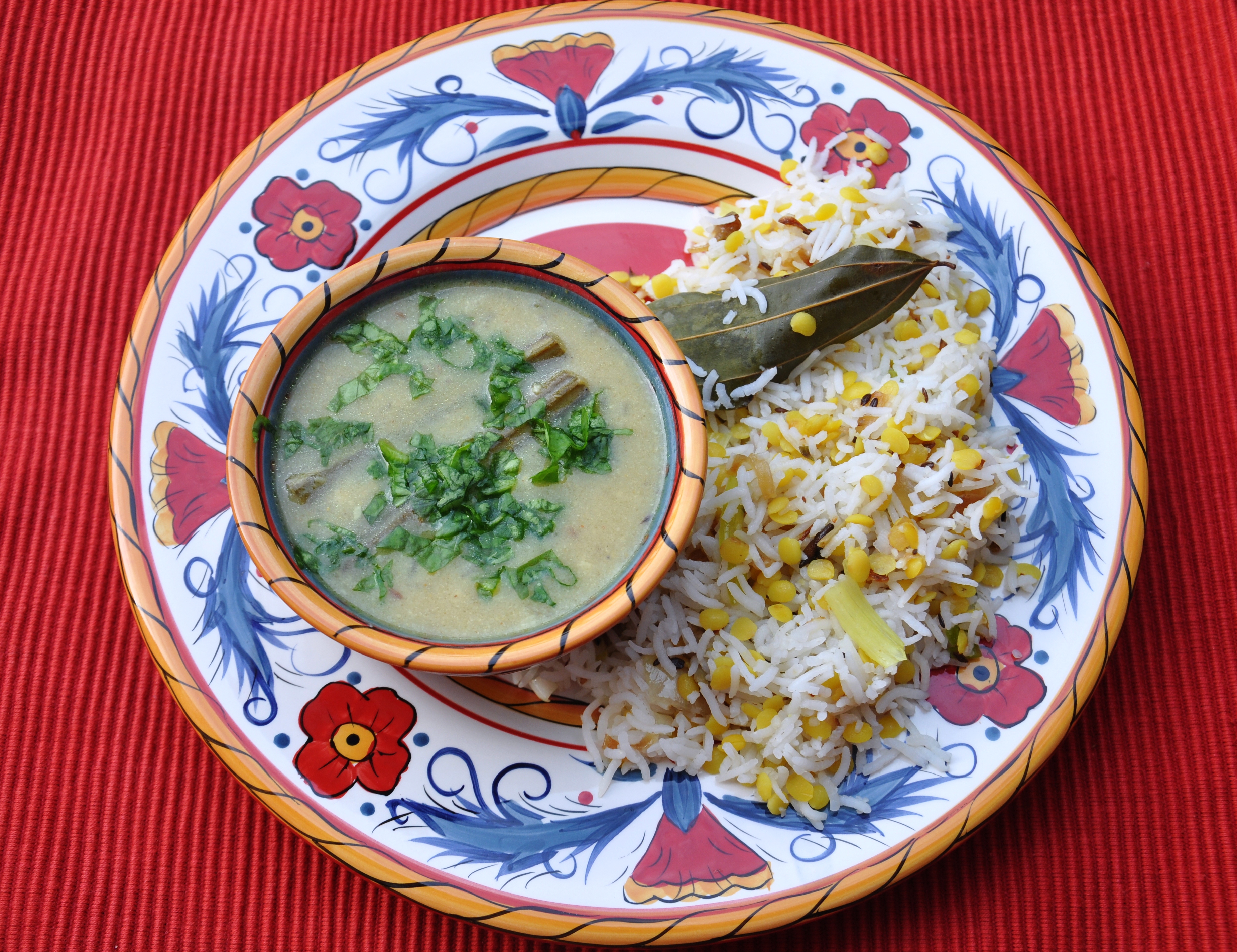
Tip: You can add more besan to thicken the consistency if the palidu seems soupy.
The lentil and rice mixture must be eaten along with the palidu. Traditionally, this dish is served with some pappadums and pickle, adding some wonderful crunch and spicy tang to it. If you have any interesting variations to this dish or a different way of making it, please feel free to share your comments on this blog.

Iron Chef competition last weekend – Secret Ingredient: Coconut
Last weekend, I had the most amazing time taking part in an Iron Chef style cooking competition that my sister and a friend organized. Unlike the Food Network show, where chefs have to prepare a full course of dishes within an hour after learning about the secret ingredient, we were informed of the secret ingredient a week ago, so that gave us ample time to brainstorm recipes and develop something unique. Also, each family made one dish that utilized the secret ingredient. I must add that the sumptuous food was prepared by some truly efficient and talented ‘Iron Women’ whose culinary prowess is as developed as those of the Iron Chefs 🙂
The competition was judged using the same criteria as those used on the show: Taste, Presentation, Originality and Use of secret ingredient. We all scored each others dishes, hoping our spouses give us high scores 🙂
Knowing the competitive spirit within our group of friends, I wasn’t surprised with the range of innovative dishes we came up with. What I love about my group of friends is that we all come from different cultures and parts of the world, which made the competition a veritable gastronomic experience! Hubby darling couldn’t make it to the event owing to academic obligations 😦
I’ll try my best to explain what each family made. Please realize that the pictures don’t do justice to how delicious and tempting the food really was. Scroll down to see the winners!
1. Chick Xacuti (pronounced as Shakootee)
This dish was made by Cherryl, who grew up in Goa, India. Chicken Xacuti is a dish made for special occasions such as weddings, and the recipe involves the usage of copious amounts of dessicated coconut. The coconut flavor really came through when I tasted this rich curry and I went back for seconds soon after finishing my first helping.
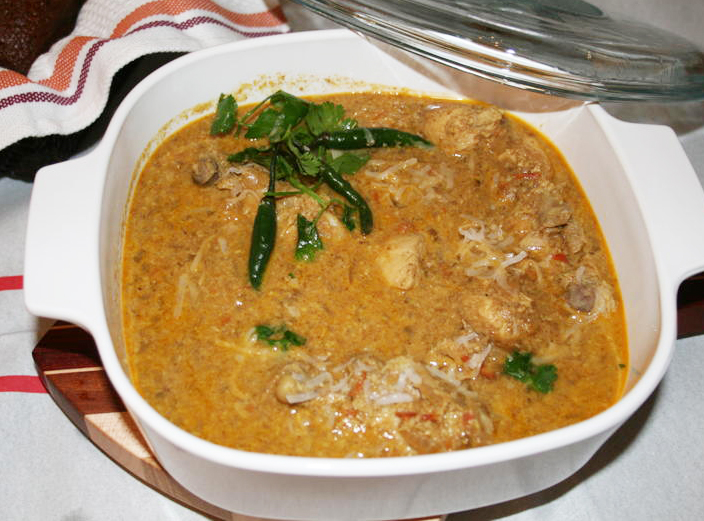
Chicken Xacuti
2. Chicken Satay served with a peanut and coconut sauce
What I thoroughly enjoyed about this dish was how the sauce played the main role, while the chicken was just a prop to make one experience the heavy peanut and coconut flavors of the sauce. Loved the way Sheila plated the dish too. I gave her full marks on presentation!
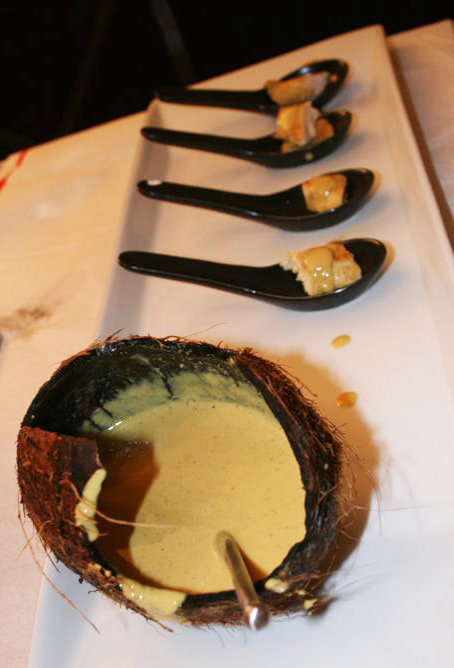
Chick Satay served with a peanut coconut sauce
3. Coconut and chicken pilaf, cooked in a tender coconut shell
Need I say that this one also got full marks on presentation? This dish truly blew my mind. Sabeeha cooked the chicken and rice in coconut water and freshly shredded coconut. She then piled the pilaf into a tender coconut shell (with it’s own coconut meat) and re-heated it in the oven. The result was a savory, spicy chicken pilaf that was thoroughly infused with both the sweet as well as nutty flavors of coconut. Certainly something that I am sure none of us had eaten before.
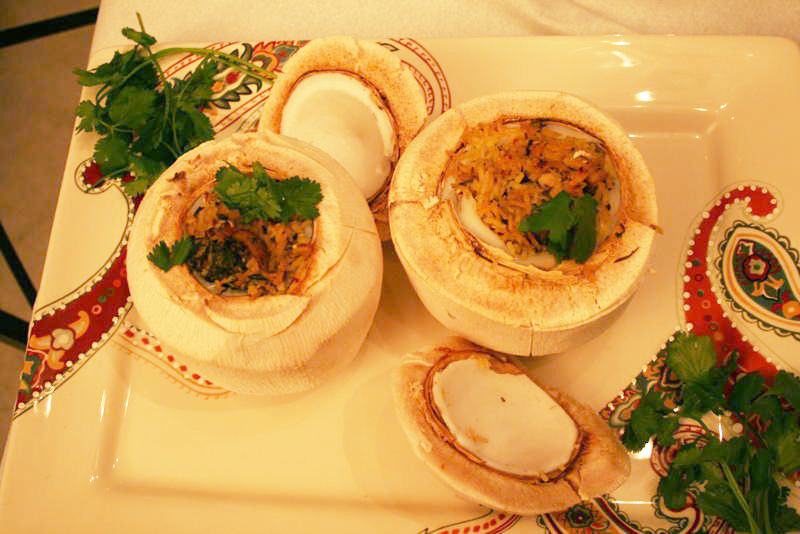
Coconut chicken pilaf cooked in a tender coconut shell
4. Coconut Shrimp in wontons
Sameera has a knack for thinking out of the box when it comes to food. I loved the crispy texture of the wonton, that matched with that of the crunchy coconut that she enveloped the shrimp in, before wrapping them in the wontons. Loved the simple flavor of the appetizers.
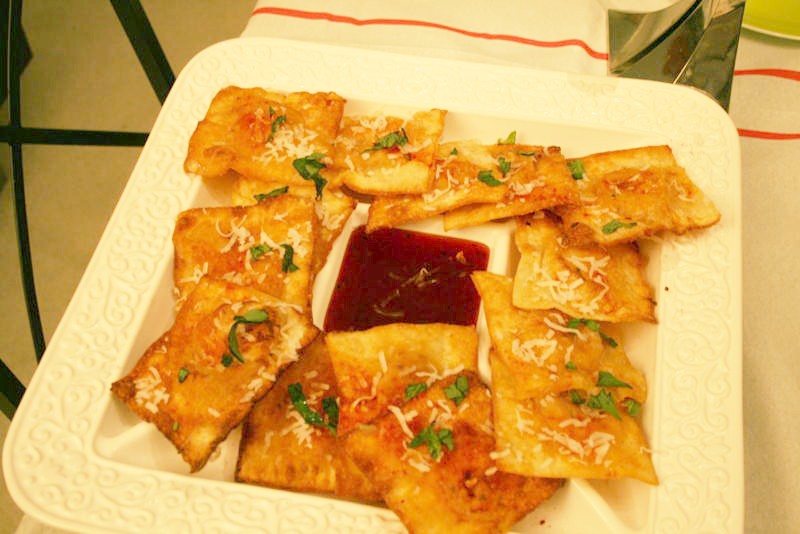
Coconut shrimp in wontons
5. Enyucado Colombiano
When you have a friend from Colombia, expect to be surprised (in a really good way) every time she cooks something. Claudia made this simple Colombian side-dish that is sweet in flavor, but has distinct savory undertones. I loved the cake-like texture to the dish.
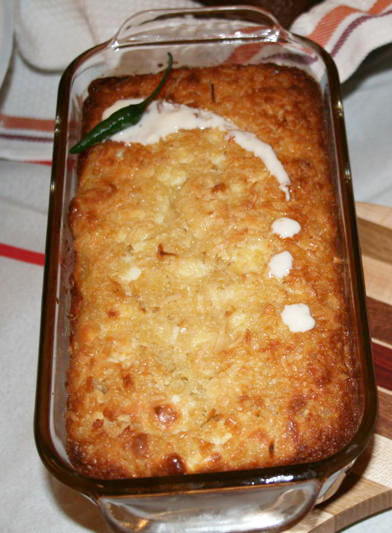
Enyucado Colombiano
6. Coconut rice crepes stuffed with Coconut encrusted shrimp
This was my entry to the competition. Prerna of Indiansimmer and Kulsum of JourneyKitchen came to my rescue when I found out about the secret ingredient and emailed them for suggestions. They both promptly emailed back with ideas and Prerna shared her family’s favorite rice crepe recipe. Using some inspiration from the Vietnamese rice crepe dish, Banh Xeo, I used Prerna’s rice crepe recipe that I modified to concentrate the coconut flavor, by using extra shredded coconut and coconut milk. I then stuffed the crepes with bean sprouts, crunchy coconut encrusted shrimp and a coconut coriander chutney. I served the dish with a really yummy and creamy, chilled Zucchini and coconut milk soup the recipe for which, I borrowed from Cooking Canuck.
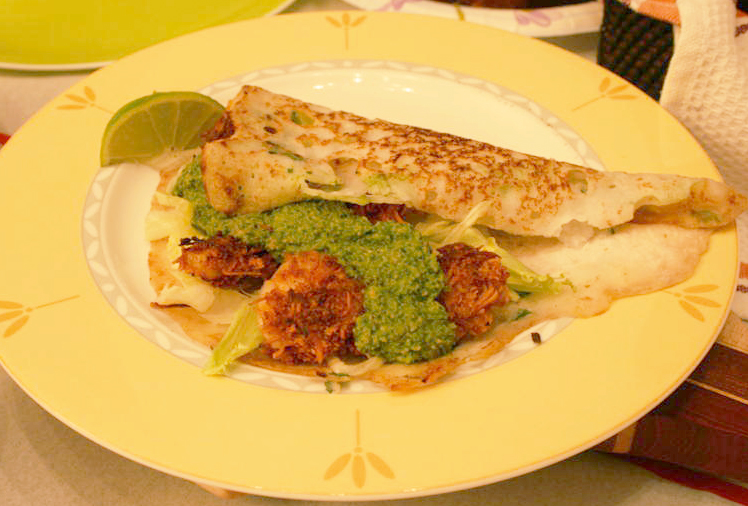
Coconut encrusted shrimp in a rice crepe
Honestly, although I loved the crepes by themselves, I don’t think the whole dish turned out as well as I had wanted it to. But I have to say this is the most experimental I’ve been with my cooking. Hopefully, I’ll get some time to improve on the shrimp recipe and share it with you. Here’s the recipe for Prerna’s crepes:
Prerna’s Rice crepe recipe – Modified to amp up the coconut flavor
Prerna’s recipe is very similar to the South Indian rice crepe, Dosa and I’d love to eat this for breakfast, lunch & dinner and even in between! Loved these crepes as is, with some cilantro chutney or ketchup.
Ingredients:
- 3 cups rice flour
- 1/4 cup semolina, or cream of wheat (sooji)
- 1 cup coconut milk
- A handful of finely chopped cilantro
- 2 Thai green chilies, minced
- 1 tbsp salt or more to taste (the rice flour is quite bland)
- 1/2 tsp sugar
- 1 tbsp Olive Oil
- 4 tbsp shredded coconut (available frozen at any Asian grocery store)
Method:
Mix all the above ingredients in a large bowl and make a flowing, thin batter using as much water as needed (at least 6-7 cups). Mix very well and keep aside for 1/2 hour or so.
Heat a non-stick pan or skillet on high heat, after pouring a few drops of cooking oil on it. When very well heated, pour a ladle-ful of the batter on the pan. The crepe will form holes right away. Allow to cook on high heat for a minute or so or until you can see the sides turn brown. If you feel the crepe is sticking to the pain, pour a few drops of oil on the sides of the crepe. Cook the crepe upto the desired level of crispiness.
Flip the crepe over with a spatula and cook for 30 seconds or so. Remove crepe off pan when done.
Before making the next crepe, clean the pan with a wet piece of cloth. This reduces the temperature of the pan and also cleans any remnants of the previous crepe. Repeat the same process with the next crepe, adjusting the temperature on the pan, as it will get hotter and hotter if you don’t reduce and then increase the temperature, in breaks.
The Winners
1st Place: Sabeeha’s Coconut chicken pilaf in a tender coconut shell.
2nd & 3rd place were tied between Sheila’s chicken satay and my rice crepes.
Guest Post: Aloo Paratha
I first ‘met’ Michaela Samant through my Facebook page where she asked the community what a particular leafy vegetable that she found at the local market was called. After I saw the image she had posted, I was certain that the vegetable wasn’t grown in the US and was pleasantly surprised to learn she lives in the Indian state of Andhra Pradesh. Slovakian by birth, Michaela is married and mommy to 2 adorable children. She spends her time exploring the Indian cuisine and blogging about it in Slovakian here.
It is my pleasure to host Michaela on OneLifeToEat today, where she shares her simple recipe for the classic Indian favorite, Aloo paratha.

Aloo Paratha
When I first tasted Indian food, it was a South Indian dish – Sambar, which is a lentil preparation, that was served with steamed, unsalted rice and some kind of stir fried vegetable. It was so alien from the cuisine I grew up with! Very spicy, very different. After a few years of living in India I still can’t find pleasure in south Indian curries. But they do have some other interesting dishes such as Masala Dosa – a crispy rice-flour crepe that is served with coconut chutney…I am ready for it anytime!
My husband’s family mainly follows the Malvani and Konkani style of cooking, that makes an interesting use of coconut and kokum. The cuisine of the Konkan region in India has an interesting and distinct flavor, and in my opinion, something a foreigner must certainly start their Indian culinary experience with.
Apart from Konkan cuisine, I also enjoy a lot of other popular Indian dishes like Paneer Butter Masala, Butter chicken and Coconut shrimp curry. My children’s all time favorite is the classic Indian bread – Aloo Paratha, which I make very often. Here’s my simplified recipe for the popular bread in my home.
Ingredients:
For the dough:
- 1 and 1 / 2 cups refined all-purpose flour
- Salt
- 2 tablespoons of ghee
- Lukewarm water (enough to make elastic, nonsticky dough)
For the filling:
- 3 medium sized potatoes; boiled in their skin
- Salt
- 1 / 4 tsp turmeric
- 1 / 4 tsp Amchoor powder (dried mango powder)
- 1 / 3 tsp Garam masala
- Handful of coriander/cilantro leaves, chopped
Method:
- Mix Maida with salt, add ghee and enough water to make dough elastic, non-stick dough. Dust it with little flour and leave aside in a bowl, covered with a kitchen cloth.
- In another bowl mash cooked and peeled potatoes. Add salt, turmeric, Amchoor, Garam masala and chopped coriander leaves and mix everything well.
- Now make equal number of balls with the dough and potato mixture. Balls made of potato mixture must be slightly smaller than balls made of dough.
- Take one ball of dough and flatten it with a rolling pin till it is about 1/2cm thick. Place the potato filling in the middle of the flattened dough.
- Wrap potato ball with dough, press edges with your fingers and roll it in your hands to make a ball.
- Roll the ball gently to make ½ inch thick paratha (don’t use more flour for rolling). Don’t press paratha too hard and don’t roll too quickly to avoid filling coming out of the dough.
- Heat a non-stick pan or iron tava. When it is well heated, reduce the fire and cook parathas from both sides until brown.
- Spread some butter on the cooked parathas and serve immediately.

 Michaela was born in Slovakia (central Europe, former Czechoslovakia), and in 2002 she married her Indian husband and settled in India. They have 2 daughters (7y. and 2y.). Michaela shares her experiences with the Indian cuisine and her Indian recipes in her Slovakian blog.




 One Life to Eat