15 minute Asian Chicken Stir-Fry
I’ve been in a peculiar cooking phase lately. Just upto a few weeks ago, I was all for learning elaborate new recipes that required large amounts of time for prep work and cooking, requiring me to wash several dishes afterward. A few weeks ago, its as though something switched off in my brain. I’ve been experiencing an extreme aversion to lengthy recipes and all I really want to do is not be in the kitchen for more than an hour, cooking + cleaning afterward.
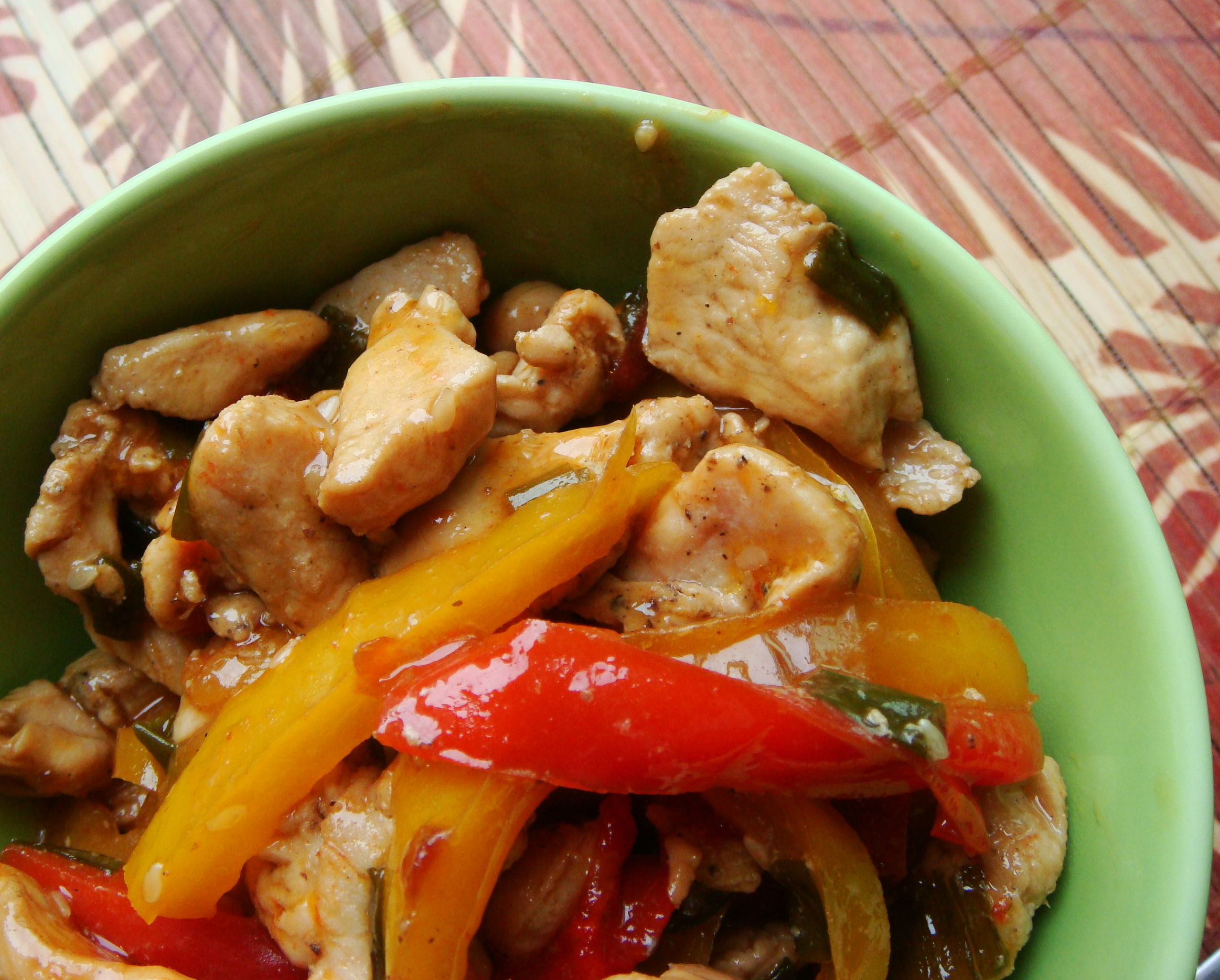
Asian chicken stir-fry
At the same time, I also wanted to cook something new. So I dug into my pantry as well as my imagination and came up with this really simple chicken stir-fry recipe that literally takes just 15 minutes to cook with about 10 minutes of prep work. My husband just loved it. Make some quick Chinese fried rice with it and you’re ready for dinner. Here’s how you make it:
You will need:
- 1 lb Boneless skinless chicken breasts, cut into thin strips – some grocery stores sell already prepped chicken breast specially for stir-frying
- Juice of 1/2 lime
- 1/2 red bell pepper
- 1/2 yellow bell pepper
- 3-4 scallions, chopped – keep the green and white parts separate
- Any low-sodium spicy asian stir-fry sauce available at your local grocery store
- Sweet & sour sauce
- Sriracha sauce
- Low-sodium soy sauce
- Salt & pepper to taste
- Garlic powder
- Sesame seeds and red chili flakes for garnishing
- Vegetable oil
Method:
- In a glass bowl, place the chicken and marinate in 2 tbsp of soy sauce, salt and pepper to taste, and a sprinkle of garlic powder. Mix well and leave aside
- Thinly slice the belle peppers, lengthwise
- In a large non-stick pan or wok, heat 2 tbsp of oil and when heated, add the whites of the scallions
- After stirring for 30 seconds or so on medium heat, add the bell peppers
- Cook for a minute or so with a lid on, then add about 1/2 cup of the stir-fry sauce. Based on how spicy the sauce is, you may add more or less as per personal preference. Also add about 1 tbsp of the sweet & sour sauce and a squirt of Sriracha sauce
- Mix well and add the chicken. Allow the chicken to cook on medium heat, stirring occasionally
- When the chicken is cooked through, about 3-4 minutes, garnish with sesame seeds, red chili flakes and the chopped green scallions. Mix well
- Serve steaming hot with fried rice or sticky white rice

I’m hoping my brain doesn’t change on me anytime soon 🙂
East African Snack Time: Jugu Cake
Mehnaz and I ‘met’ through Brazen Careerist and over time, learned we had more in common than just our cultures! A few months ago I had the pleasure of meeting her sister Zoyah. I follow Mehnaz’s blog pretty regularly (go check out her blog… I LOVE the way she writes!) and visit Zoyah’s blog whenever I need some sweet inspiration (check out her really fun blog on baking and cooking here). This week, the amazing sisters from Canada share their recipe for a family favorite.
We grew up in a household with no shortage of neighbours popping by for a quick cup of chai, Friday night cook-outs, and on-the-fly beach barbecues. Any East African/ South Asian grandmother will tell you that you should always be ready for company that may happen to drop by. After our family left East Africa, we carried with us to the new country, the proud tradition of overfeeding our guests (not that anybody seems to mind).
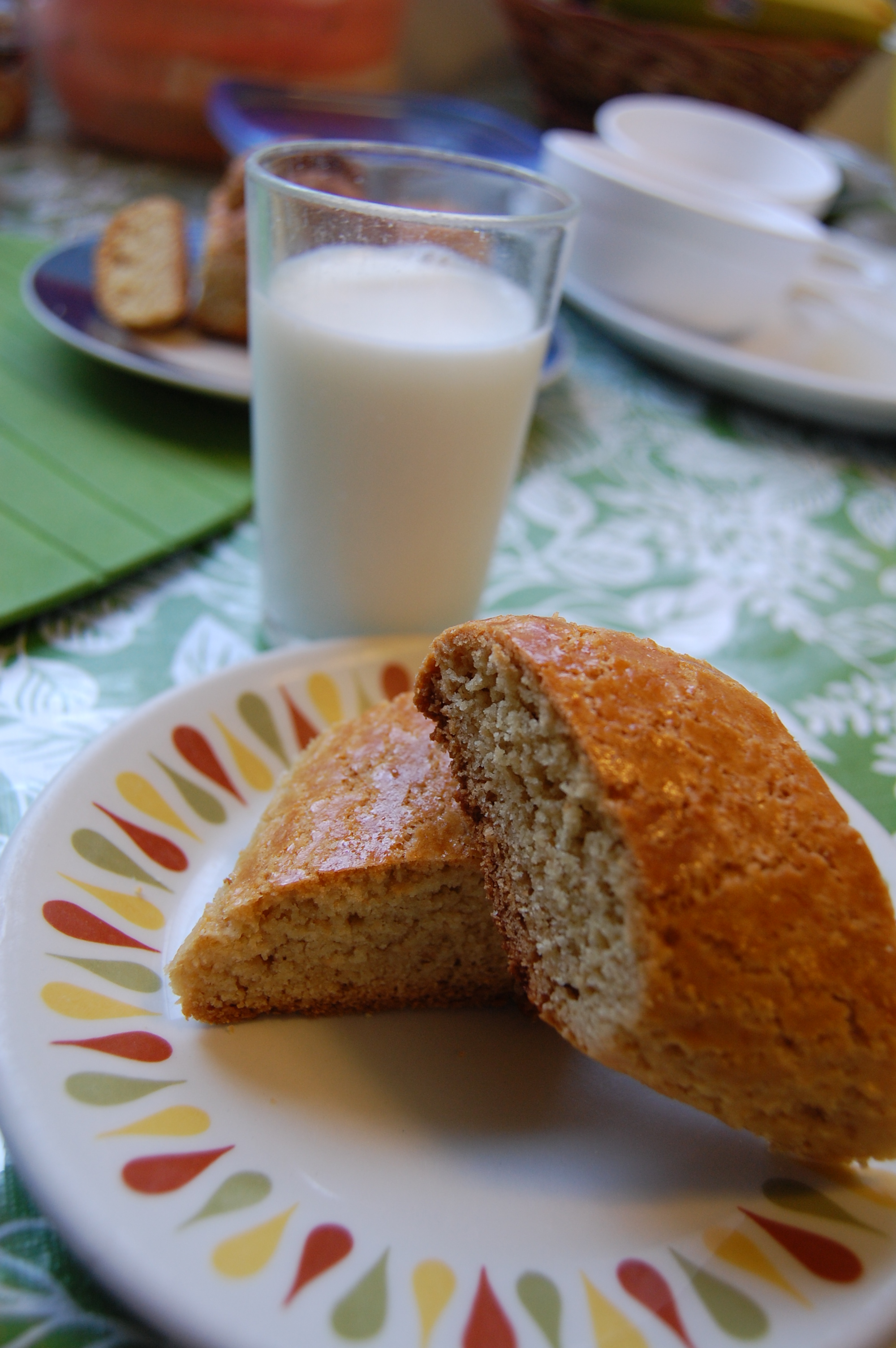
Jugu cake (the word “Jugu” means peanut in Kiswahili) is an East African and Indian cross-over similar to biscotti, but chewier and denser. It is still a favourite in the home, and usually disappears within the week when it is made. We should caution you that it is entirely possible to eat too many in one sitting. Here’s how it’s made:
Ingredients:
- 3 cups roasted unsalted peanuts
- 5 cups all purpose flour
- 2 cups white sugar
- 1.5 tsp baking powder (heaped)
- 3 eggs, beaten (remove one egg yolk and save in a separate bowl)
- Half cup margarine (1 stick)
- 1 tsp baking soda
- 1 cup milk
Method:
– Preheat oven to 350 degrees (F)
– Grind peanuts until they resemble a mealy texture, not a complete powder
– Mix together peanuts, flour, white sugar, and baking powder in a large mixing bowl
– Melt margarine completely and pour over the dry ingredients
– Beat the eggs (3 whites, and 2 yolks), and add to the dry ingredients and margarine
– Warm the milk in a pan, until simmering. It should be nice and warm
– Add baking soda to the milk (frothing is normal – the milk, not you), and pour over into the mixture
– Work Quickly : Bind until the dough comes together. The dough should be pliable, but not tough
– Divide the dough into 5 equal portions.
– Roll each piece into a log (about 12 inches in length), and place into a greased baking sheet. Place slightly separately from each other. Note: We sometimes find it easier to roll the logs right in the baking sheet, just to avoid having to carry logs back and forth and risking breakage and tears.
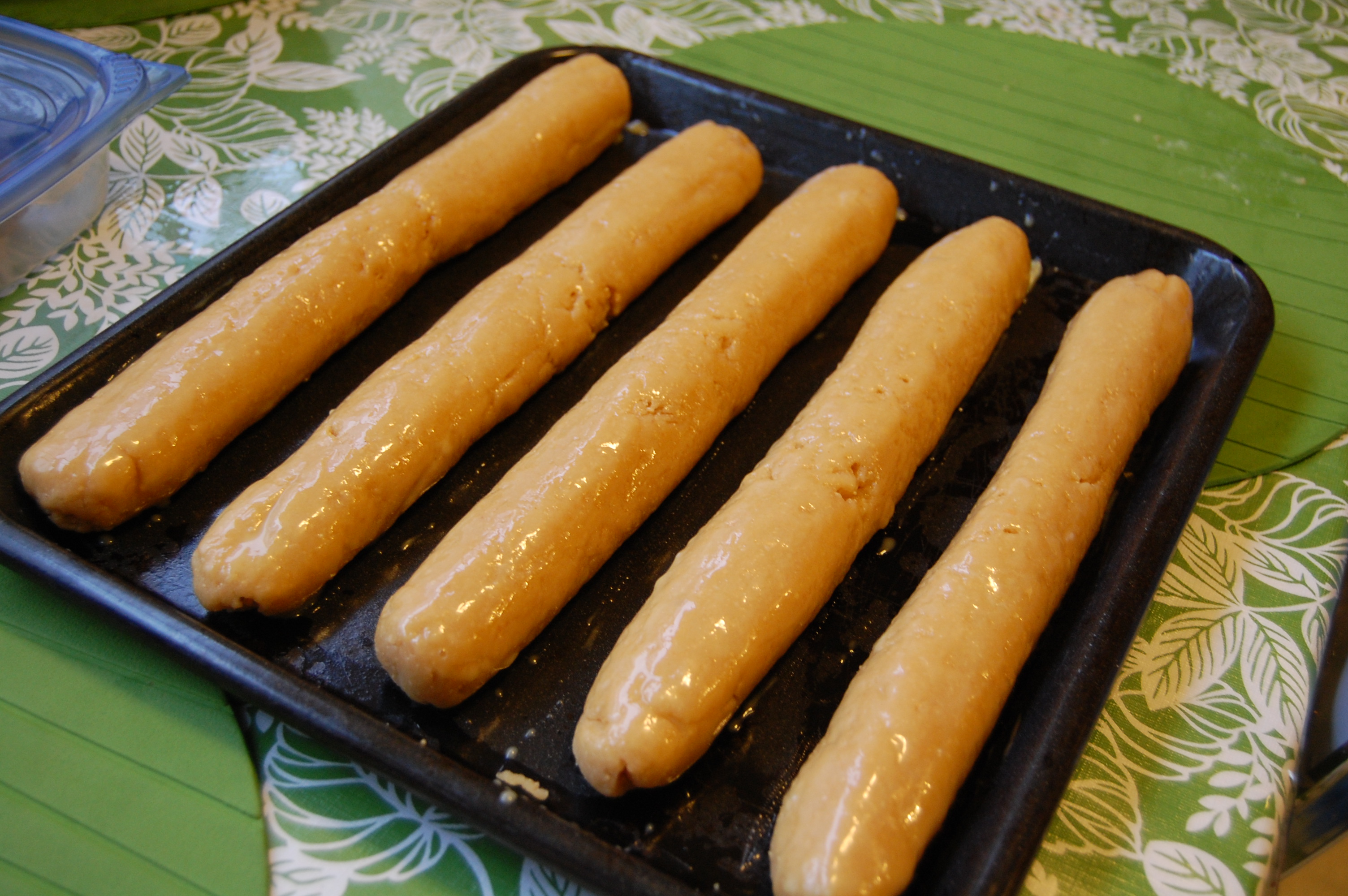
– Add 1 tsp of milk to the egg yolk and brush the logs generously
– Bake at 350 degrees for 40-50 minutes or until golden-brown

– Allow to cool for about 5-8 minutes.
– Cut into diagonal slices about 1.5 – 2 inches thick (like you slice biscotti).
– Eat all the ends, and bits that have fallen apart.
– Jugu cake is best served with a cup of home-made masala chai, a glass of warm milk, or a cup of your best coffee.
Storage: Store in an airtight container (though there likely won’t be anything to store).

Bio:
Mehnaz and Zoyah are sisters (and polar opposites) who live in Vancouver, BC, Canada. Mehnaz is a writer and editor who blogs regularly at Speak Softly and Carry a Red Pen. Zoyah is a biology student who blogs her baking adventures at Honey Tops by Zoyah. When they aren’t starting useless arguments and borrowing each other’s clothes, they come together over their love for food (Zoyah does the baking, Mehnaz, the eating).
Safety tips in Indian cooking
Hello readers! Hope you’re all having a wonderful Saturday. Here in Minneapolis, its 45 degrees F but the sun is shining brightly and it feels like a happy day!
I’ve been absconding from my food blogging duties lately owing to a very busy personal schedule. I am happy to say that everything I was busy with has progressed as planned. You can read about part of what I was busy with here.
Today, I would like to share some safety tips I followed when I first started cooking Indian food all on my own and still follow today, although it is now second nature. I spend a good 20 minutes on safety tips in my cooking classes and my students are often better off for it.
Some safety and cooking tips in Indian cooking
1. Always prepare Indian food on medium to low heat, unless specified in the recipe, and always wear an apron. As Indian cooking involves adding whole spices directly to the heat, they tend to splutter and may injure you. Cooking on medium heat minimizes accidents. Once you get comfortable cooking with Indian spices, you will get more confident and will know when to raise or lower the heat on your stove.
2. In case the oil / ghee (clarified butter) gets too hot and starts to smoke, turn off heat and allow the cooking utensil to stand for some time before beginning to cook. Also, using oils with low smoking points such as olive oil, don’t go well in Indian cooking.
3. Ghee or clarified butter, widely used in Indian cooking, has a far lower boiling point than vegetable oils. Always heat Ghee on low to medium heat and pay attention to the pot. If it begins to smoke, it is too hot.
4. Sometimes, whole spices such as cumin or mustard seeds may get burnt in oil or ghee. They will release a distinct burnt smell and look dark brown when they start to burn. Throw away the whole mixture and restart, no matter how pressed you are for time. Nothing is worse than the taste of burnt cumin seeds.
5. Always taste your dish before serving. If you feel it lacks spices, feel free to add more even after the whole dish is cooked. Mix well and allow the dish to simmer on low heat for some more time if you add more spices, to allow the flavors to infuse into the dish.
6. Lastly, if you are a novice to Indian cooking, start by adding powdered spices sparingly. Then adjust as you get a feel of how the spices taste and as you understand what your personal preferences are. Many of my students are wary of Indian cooking because they think it is too spicy. Give Indian cooking a try by using spices in smaller quantities.
What are some tips you follow when preparing food? Feel free to share in the comments below!




 One Life to Eat